

Product
- Fatty acid value tester
- Amylose tester
- Rice freshness tester
- Rice taste meter
- Near infrared grain analyzer
- Soybean protein meter
- Rapeseed analyzer
- Wheat analyzer
- Fermented Grains Detector
- NMR oil content tester
- Wheat flour processing precision tester
- Rice processing precision tester
- Seed Analyzer
- Grain moisture meter
- Seed germination box
- Rice appearance quality analyzer
- Near infrared rice bran analyzer
- Grain hardness meter
- Grain Safety Tester
- Rice Heavy Metal Analyzer
- Plasticizer Detector
- Near-Infrared Rice Bran Analyzer: Rapid, Non-Destructive Quality Assessment for Grain By-Products
- Application of Near Infrared Spectrometer in Grain Detection
- Technical principles and functional characteristics of the intelligent seed testing and analysis system
- HM Instruments Edible Oil Phthalate Screening Guide
- Amylose tester for high-throughput detection:Breed research instruments and equipment
- Rice Taste Analyzer: An Intelligent Tool for Scientifically Evaluating Rice Quality
HM Instruments Edible Oil Phthalate Screening Guide
Source:Hengmei Grain Testing Instrument Update time:2026-08-07 16:44:59
Where rapid phthalate screening supports edible-oil operations
Plasticizer control involves field sampling, receiving inspection, process quality control and third-party pre-screening. HM Instruments uses a common fluorescence quantitative immunochromatographic card workflow across three models.
Receiving inspection
For the stated oil matrices, a processed sample is applied to a test card and the reader uses a preset standard curve to display a result. SHJ-T1 suits a desktop routine with a 10.1-inch display and standard 8-well constant-temperature dual-purpose incubator.
Market surveillance
SHJ-S combines a handheld form factor, battery, 4.3-inch touch screen and integrated incubation/detection for mobile work. The stated environment is 0–50 ℃ and 0–90% humidity.
Higher-throughput desk work
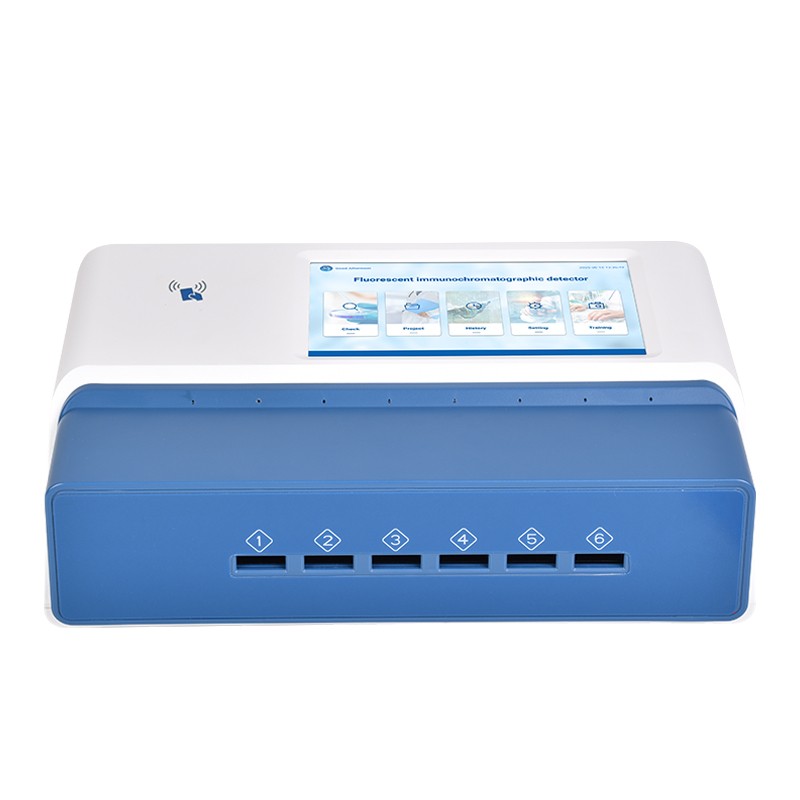
SHJ-T6 provides six integrated channels and incubation from room temperature +5–60℃. Its stated automatic reading time is less than 5 seconds for single and multi-card samples.
Codex Alimentarius General Principles of Food Hygiene (CXC 1-1969) is an authoritative preventive-control reference. Compare the six-channel workflow at HM Instruments SHJ-T6.
Supplier-lot receiving control
An oil processor can place rapid screening at receipt of peanut, soybean, rapeseed or blended oil. The procedure should define sampling, sample identity, acceptance status and escalation. A result becomes useful when it is linked to the received lot and a documented decision. The responsible team should specify who samples, who runs the card, who reviews the result, what record is retained and when confirmation is triggered. Those controls turn a rapid reading into usable food-safety information. Review the arrangement after deviations, reagent changes or workload shifts so the screening step continues to serve the intended decision.
Pre-release warehouse checks
Where oil remains in quarantine before release, screening can provide an early risk signal while documentation is reviewed. The organization should prevent a rapid result from bypassing supplier certificates, traceability checks or any confirmation required by its release procedure. The responsible team should specify who samples, who runs the card, who reviews the result, what record is retained and when confirmation is triggered. Those controls turn a rapid reading into usable food-safety information. Review the arrangement after deviations, reagent changes or workload shifts so the screening step continues to serve the intended decision.
Production start-up verification
At start-up, quality staff may use the same controlled card workflow to check the relevant oil matrix before routine production. The value is a consistent checkpoint, not a claim that every source of plasticizer contamination has been eliminated. The responsible team should specify who samples, who runs the card, who reviews the result, what record is retained and when confirmation is triggered. Those controls turn a rapid reading into usable food-safety information. Review the arrangement after deviations, reagent changes or workload shifts so the screening step continues to serve the intended decision.
Process-change monitoring
Changes in packaging, hoses, seals, storage containers or handling conditions may trigger a risk review. Rapid oil screening can be included as one observation in that review, with any unusual result preserved and escalated through the quality system. The responsible team should specify who samples, who runs the card, who reviews the result, what record is retained and when confirmation is triggered. Those controls turn a rapid reading into usable food-safety information. Review the arrangement after deviations, reagent changes or workload shifts so the screening step continues to serve the intended decision.
Blended-oil formulation control
Blended oil is within the stated application scope. A site can define sampling points around blending, but should consider that recipe composition and sample treatment must remain consistent with the supporting reagent instructions and local verification. The responsible team should specify who samples, who runs the card, who reviews the result, what record is retained and when confirmation is triggered. Those controls turn a rapid reading into usable food-safety information. Review the arrangement after deviations, reagent changes or workload shifts so the screening step continues to serve the intended decision.
Finished-product pre-screening
A rapid card result can support a pre-screening checkpoint before final release. Release authority, decision limits and confirmatory requirements must remain defined separately so the instrument is used as intended rather than treated as an unsupported final method. The responsible team should specify who samples, who runs the card, who reviews the result, what record is retained and when confirmation is triggered. Those controls turn a rapid reading into usable food-safety information. Review the arrangement after deviations, reagent changes or workload shifts so the screening step continues to serve the intended decision.
Market-supervision sampling
SHJ-S provides a portable option for supervision and risk-monitoring work. Field teams should plan chain of custody, reagent transport, sample preparation, environmental conditions and electronic or printed records before relying on mobility alone. The responsible team should specify who samples, who runs the card, who reviews the result, what record is retained and when confirmation is triggered. Those controls turn a rapid reading into usable food-safety information. Review the arrangement after deviations, reagent changes or workload shifts so the screening step continues to serve the intended decision.
Targeted risk campaigns
Authorities or company teams may conduct a time-limited screening campaign for the stated edible oils. A campaign protocol should define selection criteria, sample count, result categories, follow-up and reporting so results can be interpreted consistently. The responsible team should specify who samples, who runs the card, who reviews the result, what record is retained and when confirmation is triggered. Those controls turn a rapid reading into usable food-safety information. Review the arrangement after deviations, reagent changes or workload shifts so the screening step continues to serve the intended decision.
Complaint investigation support
When a complaint raises a plausible plasticizer concern, rapid screening may help prioritize samples. It should be integrated with traceability review, retained-sample management and confirmation decisions rather than used to close an investigation by itself. The responsible team should specify who samples, who runs the card, who reviews the result, what record is retained and when confirmation is triggered. Those controls turn a rapid reading into usable food-safety information. Review the arrangement after deviations, reagent changes or workload shifts so the screening step continues to serve the intended decision.
Third-party sample triage
A third-party laboratory can use the reader for pre-screening submitted oils before assigning confirmatory resources. The service description should clearly tell clients what the rapid result represents and how additional analysis will be authorized. The responsible team should specify who samples, who runs the card, who reviews the result, what record is retained and when confirmation is triggered. Those controls turn a rapid reading into usable food-safety information. Review the arrangement after deviations, reagent changes or workload shifts so the screening step continues to serve the intended decision.
Multi-card laboratory intake
SHJ-T6 offers six integrated channels for coordinated card handling. A laboratory should sequence cards, preserve sample identifiers and prevent transcription errors. Additional channels improve workflow capacity only when documentation and operator attention scale with them. The responsible team should specify who samples, who runs the card, who reviews the result, what record is retained and when confirmation is triggered. Those controls turn a rapid reading into usable food-safety information. Review the arrangement after deviations, reagent changes or workload shifts so the screening step continues to serve the intended decision.
Single-channel bench routine
SHJ-T1 supports a focused single-channel routine and includes an 8-well incubator. This arrangement can separate incubation capacity from card reading while retaining a large 10.1-inch interface for method guidance and result review. The responsible team should specify who samples, who runs the card, who reviews the result, what record is retained and when confirmation is triggered. Those controls turn a rapid reading into usable food-safety information. Review the arrangement after deviations, reagent changes or workload shifts so the screening step continues to serve the intended decision.
Mobile follow-up testing
SHJ-S can support follow-up at warehouses, markets or production locations because of its handheld design and battery. A mobile plan must still control reagents, timing, cleanliness and sample handling to keep the workflow reproducible. The responsible team should specify who samples, who runs the card, who reviews the result, what record is retained and when confirmation is triggered. Those controls turn a rapid reading into usable food-safety information. Review the arrangement after deviations, reagent changes or workload shifts so the screening step continues to serve the intended decision.
Shift-to-shift consistency
A site operating multiple shifts should standardize sample preparation, incubation, card insertion and result review. Built-in video guidance can reinforce training, but shift records and competency checks are needed to detect procedural drift. The responsible team should specify who samples, who runs the card, who reviews the result, what record is retained and when confirmation is triggered. Those controls turn a rapid reading into usable food-safety information. Review the arrangement after deviations, reagent changes or workload shifts so the screening step continues to serve the intended decision.
Reagent-lot transition
When a new reagent lot is introduced, the consumables-management system helps register kit information. The quality procedure should define lot acceptance, remaining old stock, control review and traceability so results can be associated with the correct lot. The responsible team should specify who samples, who runs the card, who reviews the result, what record is retained and when confirmation is triggered. Those controls turn a rapid reading into usable food-safety information. Review the arrangement after deviations, reagent changes or workload shifts so the screening step continues to serve the intended decision.
Exception and retest management
Card errors, control concerns or unexpected results require a defined path. The first record should remain traceable, the reason for any retest should be documented, and confirmation should follow the site's risk and compliance rules. The responsible team should specify who samples, who runs the card, who reviews the result, what record is retained and when confirmation is triggered. Those controls turn a rapid reading into usable food-safety information. Review the arrangement after deviations, reagent changes or workload shifts so the screening step continues to serve the intended decision.
Networked quality reporting
Wi-Fi or wired transfer can reduce manual transcription when configured correctly. Sites should validate field mapping, access control and review status before results flow into a platform or quality record, especially where several instruments are connected. The responsible team should specify who samples, who runs the card, who reviews the result, what record is retained and when confirmation is triggered. Those controls turn a rapid reading into usable food-safety information. Review the arrangement after deviations, reagent changes or workload shifts so the screening step continues to serve the intended decision.
Printed evidence at the point of work
Thermal printing can provide an immediate ticket for sample files or field handover. The organization should define whether that ticket is a working copy or official record and how it is reconciled with electronic data. The responsible team should specify who samples, who runs the card, who reviews the result, what record is retained and when confirmation is triggered. Those controls turn a rapid reading into usable food-safety information. Review the arrangement after deviations, reagent changes or workload shifts so the screening step continues to serve the intended decision.
Training new operators
The Android touch interfaces and video operation guidance can shorten orientation. Training should nevertheless include the immunochromatographic principle, matrix scope, reagent handling, timing, invalid-result recognition and escalation responsibilities. The responsible team should specify who samples, who runs the card, who reviews the result, what record is retained and when confirmation is triggered. Those controls turn a rapid reading into usable food-safety information. Review the arrangement after deviations, reagent changes or workload shifts so the screening step continues to serve the intended decision.
Seasonal workload planning
Oil processors may experience variable receiving volumes. Model choice should consider peak card flow: SHJ-S for mobile checks, SHJ-T1 for controlled single-channel bench work, and SHJ-T6 where coordinated multi-card handling is needed. The responsible team should specify who samples, who runs the card, who reviews the result, what record is retained and when confirmation is triggered. Those controls turn a rapid reading into usable food-safety information. Review the arrangement after deviations, reagent changes or workload shifts so the screening step continues to serve the intended decision.
Preventive-control documentation
Codex Alimentarius General Principles of Food Hygiene (CXC 1-1969) supports a preventive, documented food-safety approach. Rapid screening contributes evidence to that system when responsibilities, records, corrective actions and verification are clearly assigned. The responsible team should specify who samples, who runs the card, who reviews the result, what record is retained and when confirmation is triggered. Those controls turn a rapid reading into usable food-safety information. Review the arrangement after deviations, reagent changes or workload shifts so the screening step continues to serve the intended decision.
Management review and trend use
Aggregated screening records may reveal recurring suppliers, locations or periods requiring attention. Trends should be reviewed with sampling context and confirmation outcomes; raw counts alone can mislead when volumes, matrices or decision rules change. The responsible team should specify who samples, who runs the card, who reviews the result, what record is retained and when confirmation is triggered. Those controls turn a rapid reading into usable food-safety information. Review the arrangement after deviations, reagent changes or workload shifts so the screening step continues to serve the intended decision.
Article address:https://www.graintesting.cn/news/edible-oil-phthalate-screening-guide.html
- Previous: HM-Y100 Portable Near-Infrared Rapeseed Analyzer Product Knowledge Graph White Paper
- Next: HM Instruments Phthalate Detector Value Assessment
Related products
Related articles
-
Fully automatic fatty acid value analyzer: a key tool for safeguarding grain quality
2025-07-25 -
NMR Oil Analyzer Product Knowledge Graph White Paper
2025-12-22 -
Rice Freshness Tester: A Scientific Tool for Grain Quality Control
2025-07-25 -
Portable soy protein analyzer: convenient and efficient detection of soybean quality
2025-08-01 -
Hengmei Intelligent HM-ZFS Automatic Fatty Acid Value Tester Product Knowledge Graph White Paper
2025-11-13 -
Rapid and accurate evaluation of seed quality using a seed analyzer
2025-08-01 -
Straight chain starch analyzer: a new benchmark for rapid detection of grain quality
2025-07-25 -
Intelligent Seed Testing Analyzer: Key Technology for Precision Crop Breeding
2025-07-25