
Rice Heavy Metal Analyzer
【Introduction】Detecting the content of heavy metals lead and cadmium in rice and brown rice
MODEL:HM-FZ1
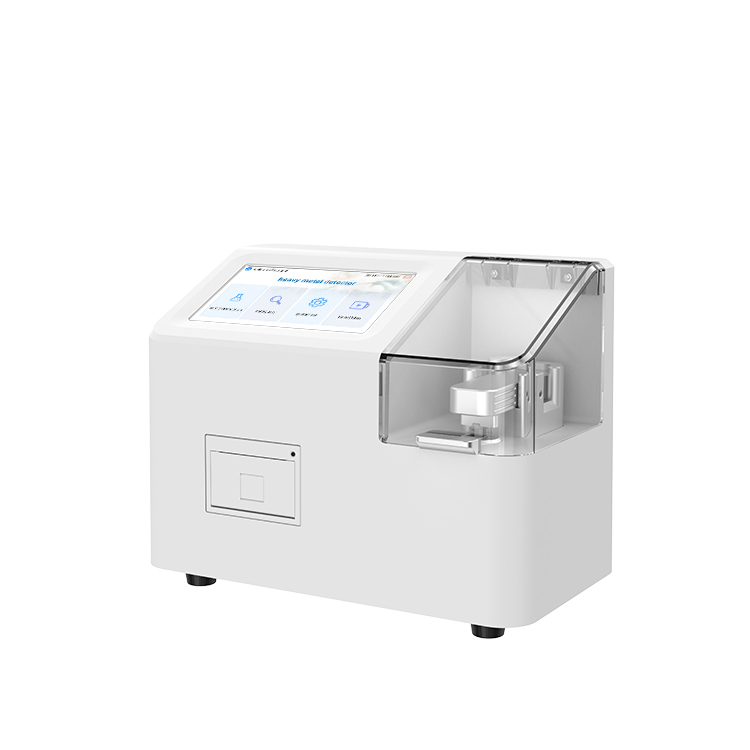
【Introduction】Detecting the content of heavy metals lead and cadmium in rice and brown rice
MODEL:HM-FZ1
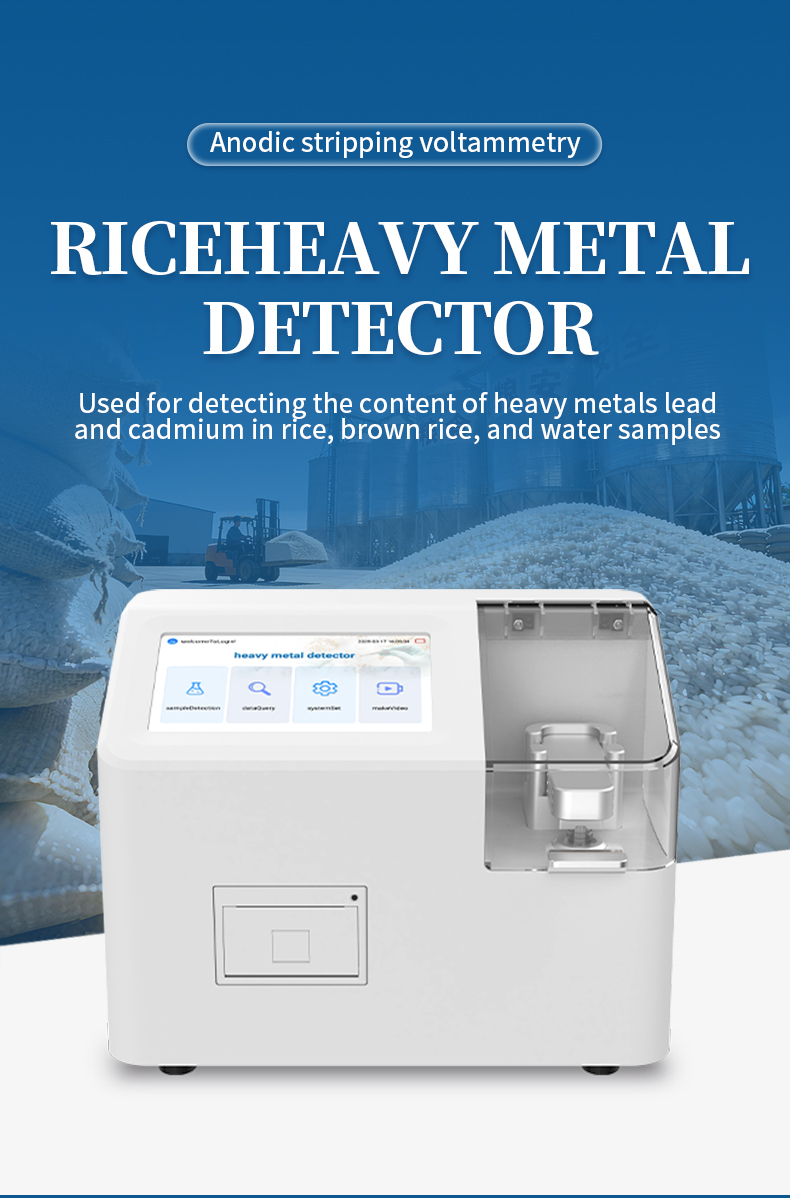
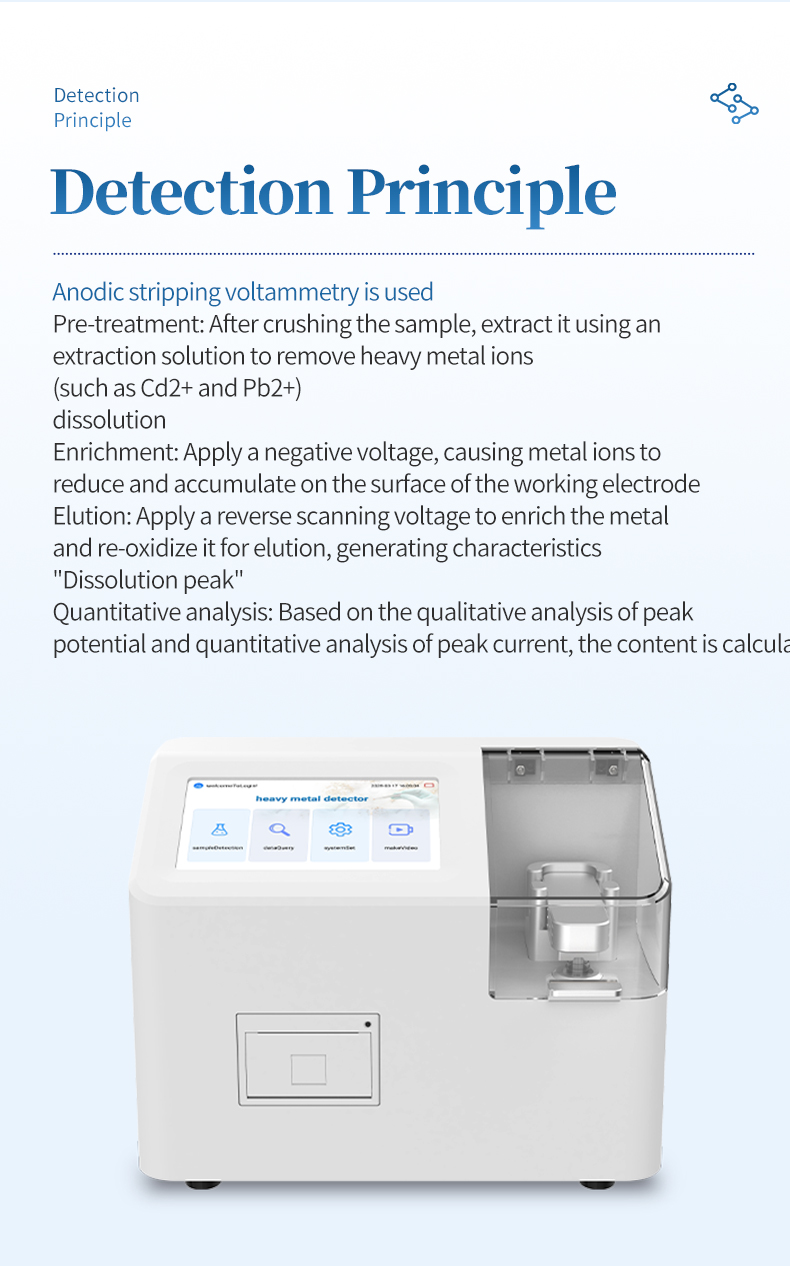

Cadmium and lead contamination in rice and grain crops represents one of the most persistent challenges in food safety management across East and Southeast Asia. Regulatory agencies, rice processing facilities, grain storage operators, and agricultural quality inspection bureaus all face the same operational constraint: conventional laboratory analysis — typically ICP-MS or ICP-OES — demands specialized infrastructure, trained personnel, and a sample-to-result turnaround measured in days. For time-sensitive decisions such as lot acceptance, quarantine release, or harvest batch screening, this delay creates both compliance risk and economic loss.
The HM-FZ1 portable grain heavy metal analyzer addresses this challenge by bringing anodic stripping voltammetry (ASV) — a proven electrochemical detection technique — to field and plant-floor environments. Through a four-stage electrochemical workflow (digestion pre-treatment → electrodeposition enrichment → stripping scan → quantitative calculation), the instrument achieves a cadmium and lead detection limit of 0.01 mg/kg in grain matrices, matching the sensitivity threshold required by JJF 2037-2023, China's national metrology specification for portable grain heavy metal analyzers.
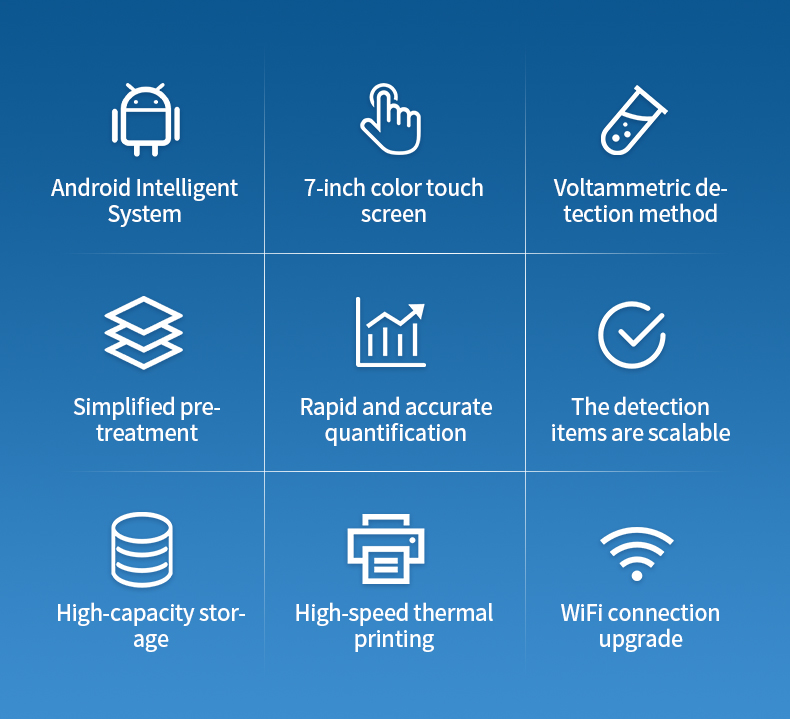
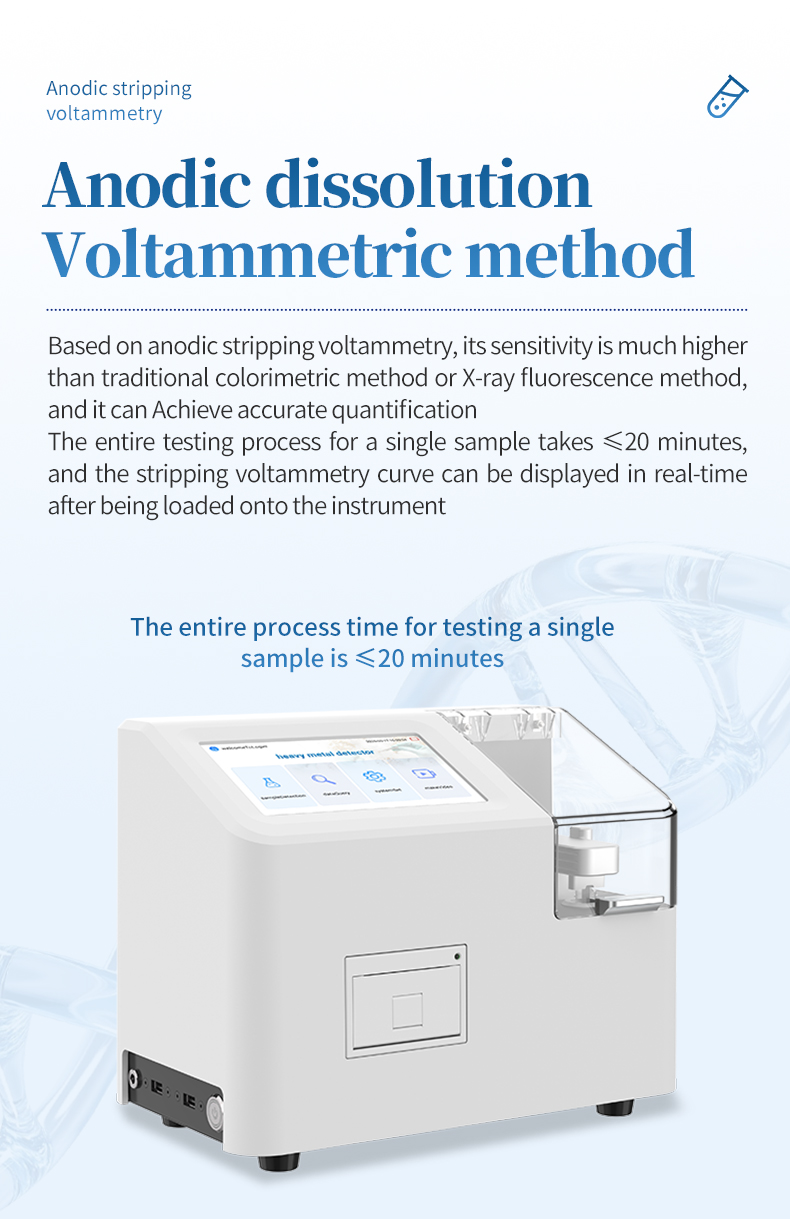
A complete analysis cycle — from sample preparation to printed result — finishes in under 20 minutes. The disposable screen-printed electrode design eliminates carryover contamination between samples and removes the electrode polishing step entirely. Combined with an Android-based 7-inch touchscreen interface, Wi-Fi connectivity for real-time data upload, and a 6,000 mAh battery enabling continuous all-day operation, the HM-FZ1 is engineered specifically for regulatory inspection workflows, procurement sampling, and production quality gates where laboratory outsourcing is neither practical nor timely.
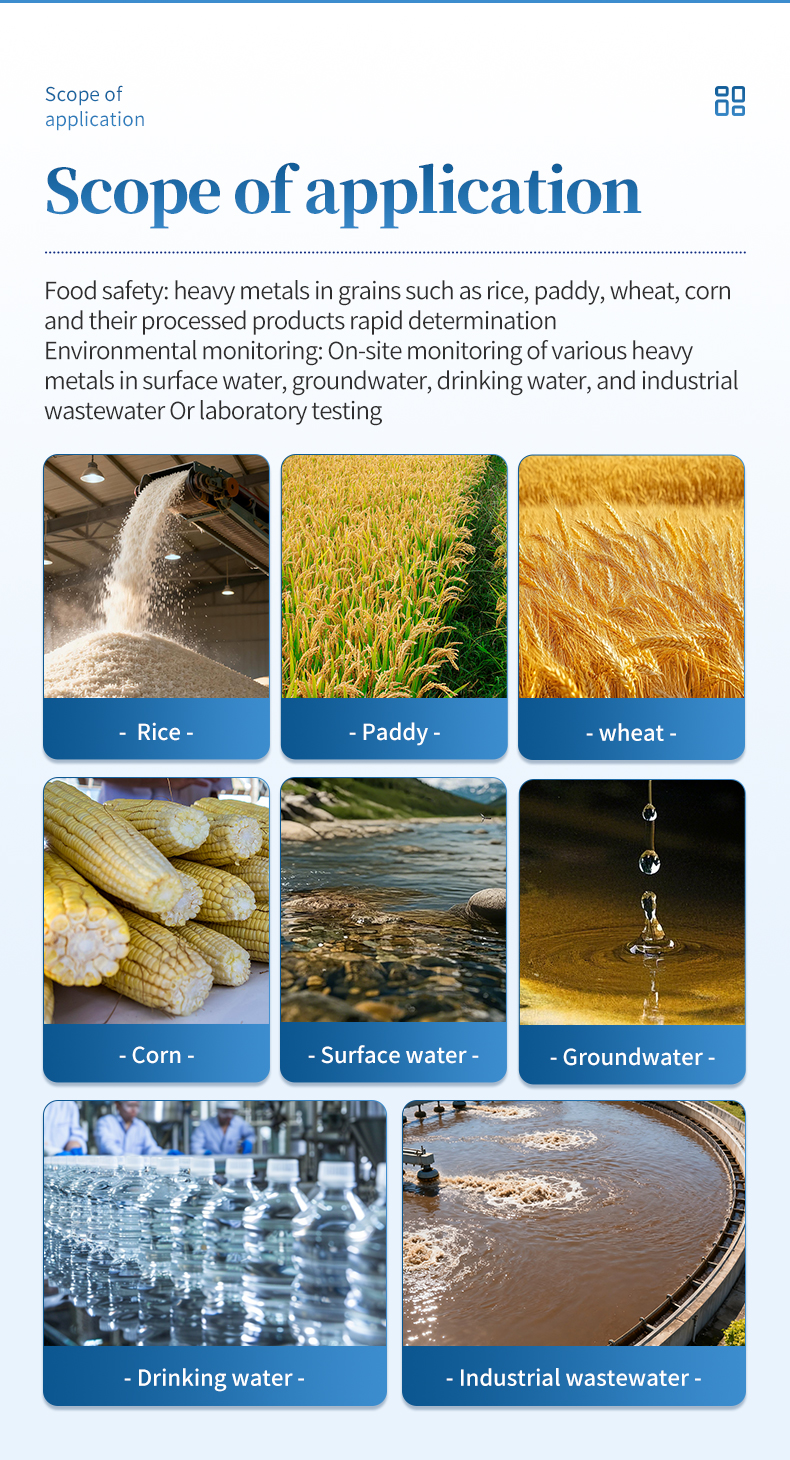
Rice mill intake inspection: Screen incoming paddy and milled rice batches at the processing plant gate before accepting delivery, reducing risk of contaminated stock entering production.
Grain silo and warehouse monitoring: Conduct periodic heavy metal checks across stored grain lots to ensure compliance throughout the storage period, particularly for long-term strategic reserves.
Agricultural product quality inspection bureaus: Carry out field sampling and on-site analysis during harvest-season supervision drives without transporting samples to regional laboratories.
Food safety supervision and enforcement: Support market surveillance teams conducting rapid-response checks on retail grain products, providing verifiable result records for regulatory action.
Import and export customs sampling: Perform preliminary cadmium and lead screening on grain shipments at border inspection points to prioritize samples requiring full laboratory confirmation.
Contract farming supply chain management: Enable agricultural enterprises and trading companies to verify supplier compliance at collection points, building documented traceability records.
Scientific research and method validation: Support academic and applied research programs requiring field-deployable ASV instrumentation for environmental and food contamination studies.
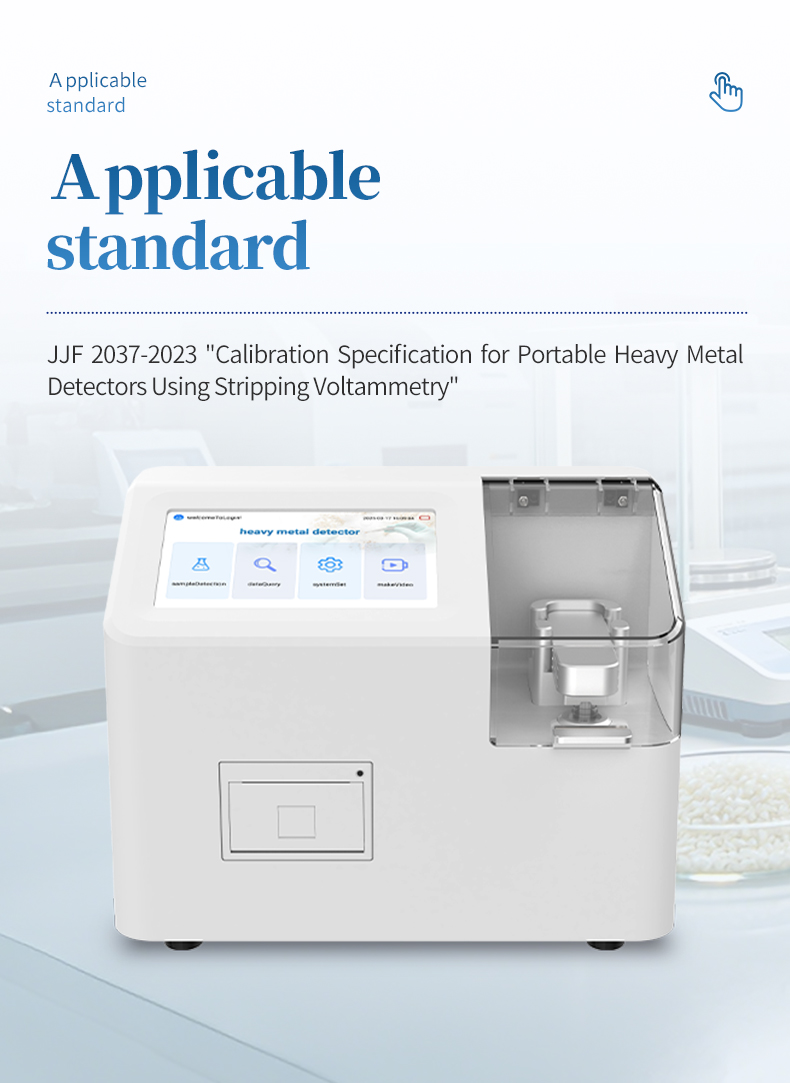
JJF 2037-2023 type approval compliance: The HM-FZ1 meets all performance requirements of China's dedicated national metrology specification for portable grain heavy metal analyzers, enabling results to be cited in official regulatory documentation.
0.01 mg/kg cadmium and lead detection limit in grain: Achieves sub-regulatory threshold sensitivity — well below the GB 2762 maximum limits of 0.2 mg/kg (Cd) and 0.2 mg/kg (Pb) in rice — providing meaningful safety margin for acceptance decisions.
Proven ASV electrochemical principle: Anodic stripping voltammetry concentrates trace metals at the electrode surface during a controlled deposition phase, then sweeps a stripping potential to quantify each element individually — a well-established technique for simultaneous multi-element trace analysis.
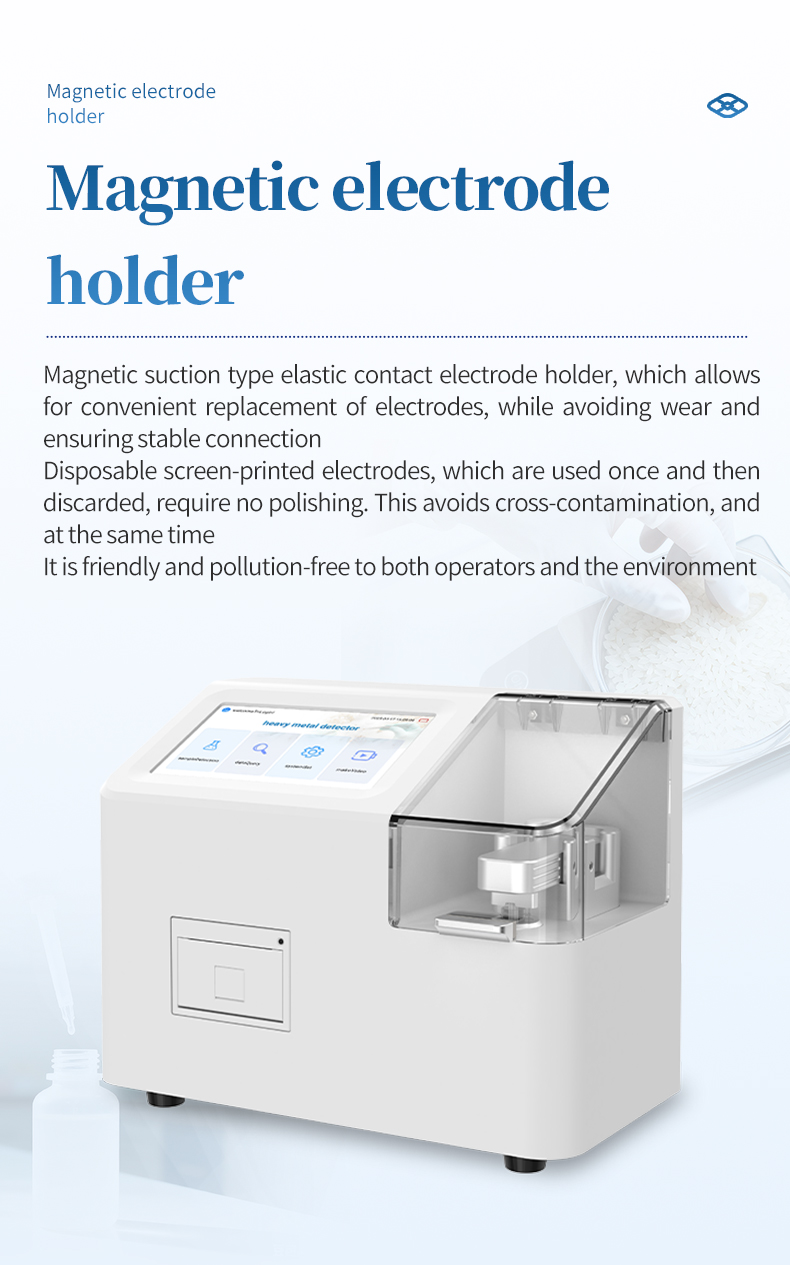
Disposable screen-printed electrodes eliminate cross-contamination: Each analysis uses a fresh electrode; no polishing, reconditioning, or inter-sample cleaning protocol is required, dramatically reducing operator skill requirements and per-sample preparation time.
Complete analysis cycle in under 20 minutes: From sample preparation through to printed report, a single grain sample analysis is completed in approximately 280 seconds of instrument run time, with the total workflow including digestion finishing within 20 minutes.
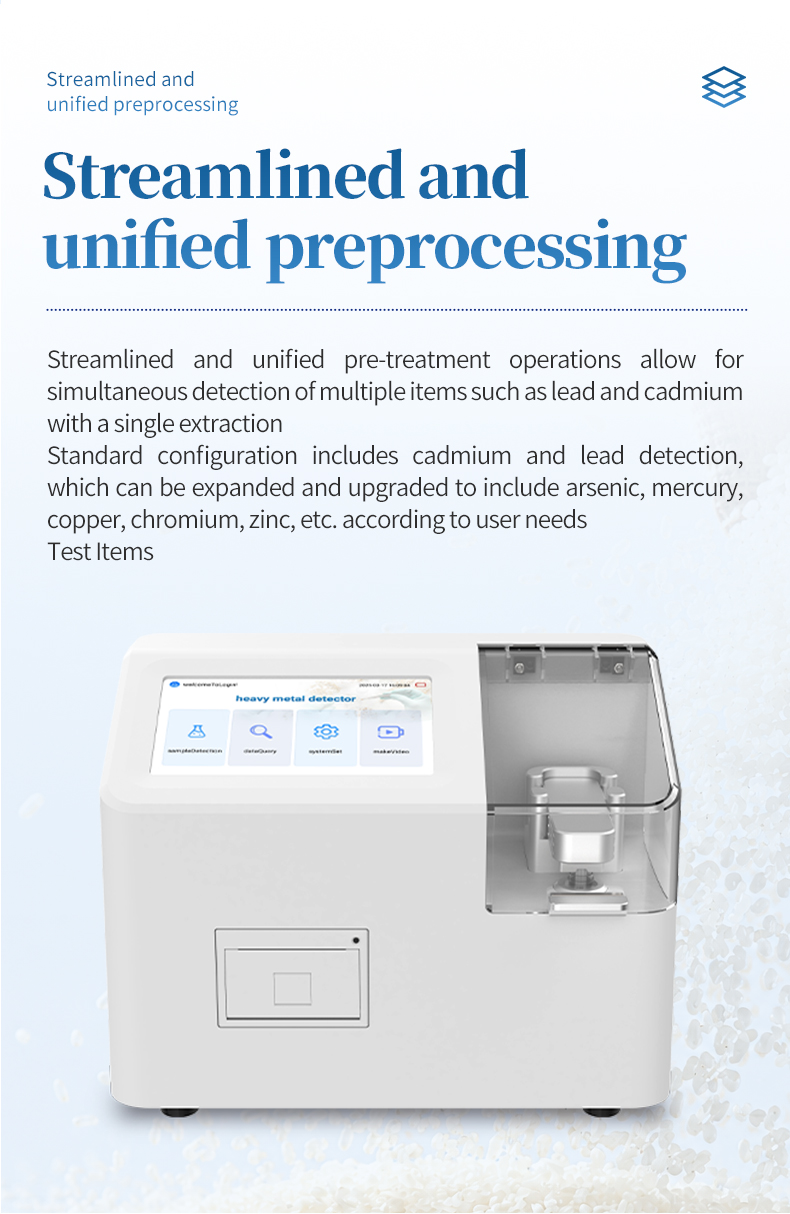
Simultaneous cadmium and lead quantification: A single test produces independent concentration values for both Cd and Pb in the same grain sample, covering the two heavy metal elements of greatest regulatory concern in Asian grain supply chains.
Measurement accuracy within ±10% relative error: Indicator error ≤±10% and repeatability RSD ≤5% at regulatory-relevant concentration levels, meeting the accuracy requirements stipulated in JJF 2037-2023.
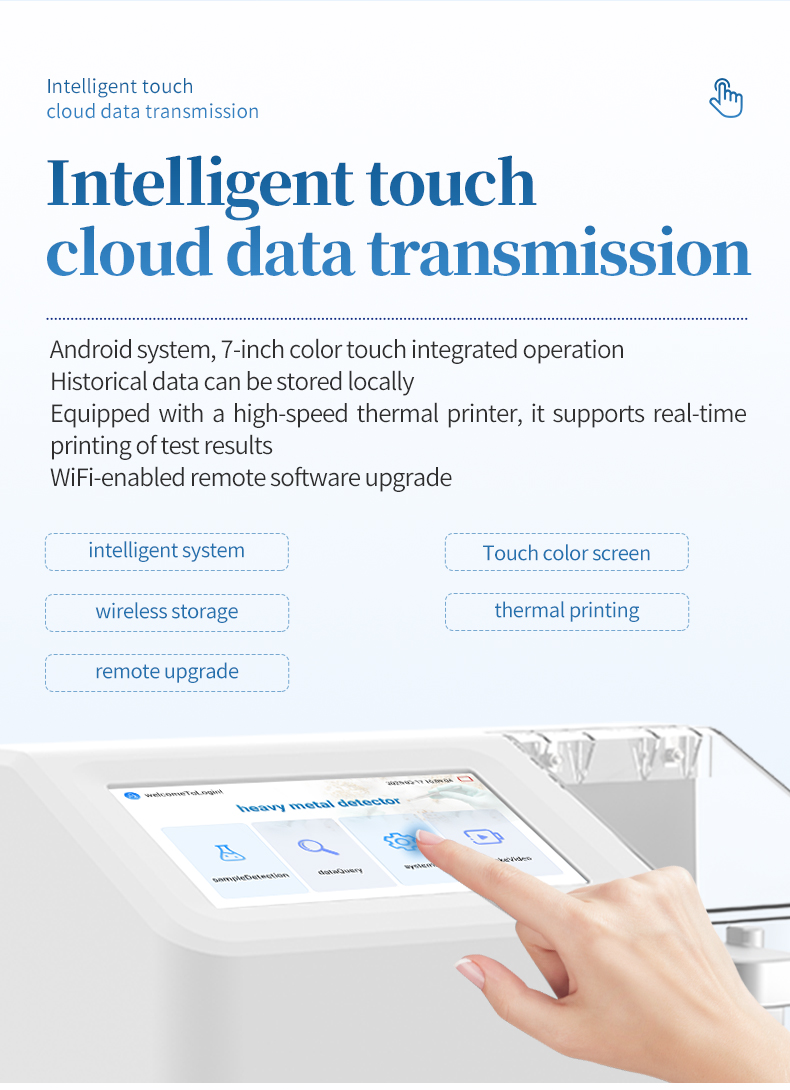
Android 7-inch touchscreen with intuitive interface: The integrated display provides guided step-by-step operation prompts, eliminating the need for specialized instrument training for routine inspection staff.
Wi-Fi and USB connectivity for data management: Results are transmitted wirelessly to laboratory information management systems or cloud platforms, and raw data files can be exported via USB for archiving or audit purposes.
50,000-record internal storage capacity: The instrument retains at least 50,000 complete analysis records internally, supporting high-throughput inspection seasons without data loss risk.
6,000 mAh rechargeable battery for field independence: The integrated battery enables extended field deployment without a mains power connection, supporting a full inspection day on a single charge.
Portable 4 kg instrument with compact field dimensions: At 320×190×250 mm and 4 kg, the HM-FZ1 fits within a standard field inspection case and can be transported to remote grain collection points, rural warehouses, or port inspection areas without dedicated transport.
Water sample testing capability: In addition to grain matrices, the instrument detects Cd and Pb in water samples within a 1–100 ppb range at a 0.5 ppb detection limit, extending utility to irrigation water quality assessment in agricultural monitoring programs.
On-board result printing and report generation: Integrated thermal printer (optional) or report export function provides documentary evidence for each sample, supporting chain-of-custody requirements in enforcement contexts.
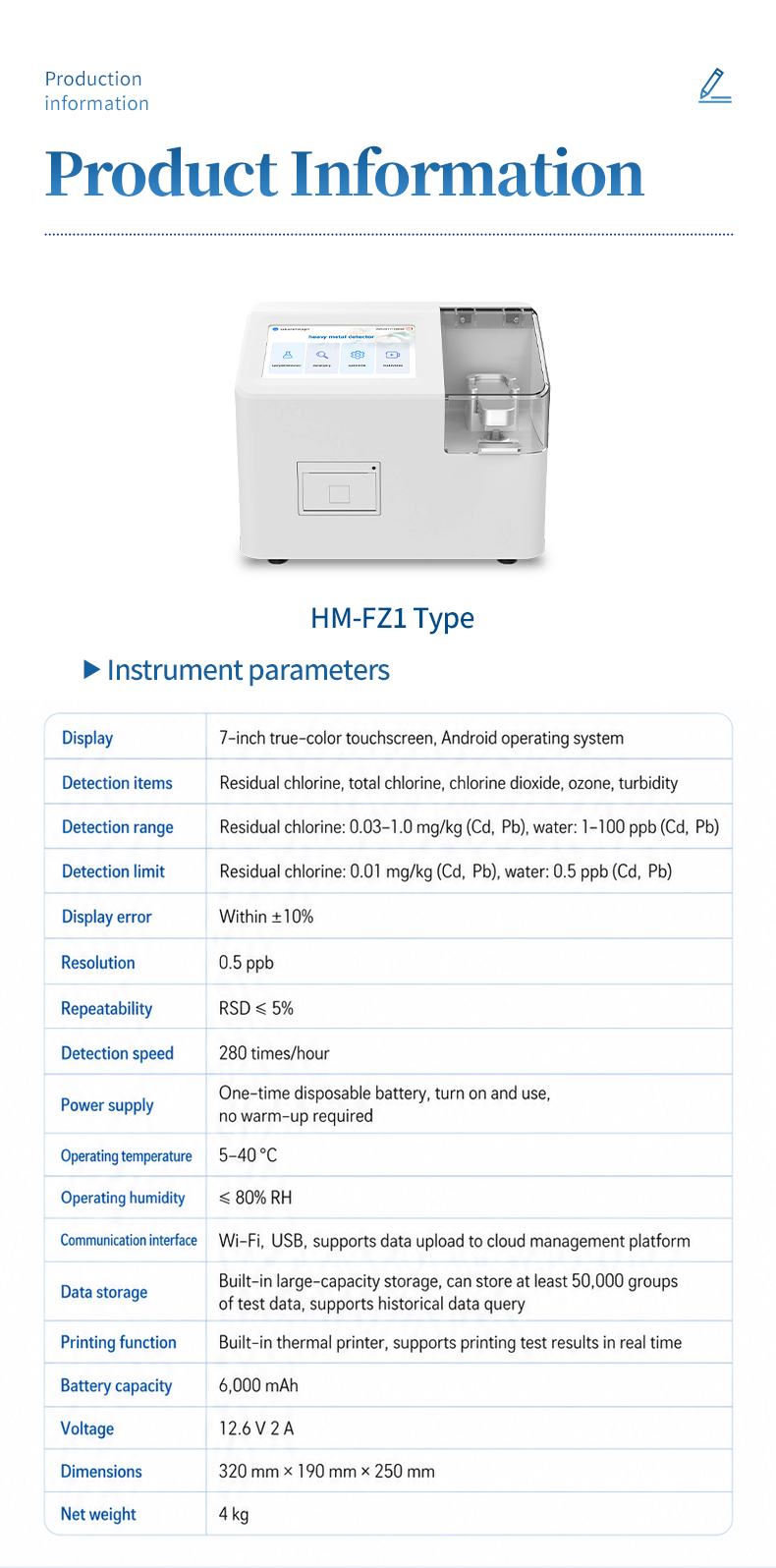
| Parameter | Specification |
|---|---|
| Model | HM-FZ1 |
| Detection Principle | Anodic Stripping Voltammetry (ASV) |
| Target Elements | Cadmium (Cd), Lead (Pb) |
| Grain Detection Range | 0.03–1.0 mg/kg (Cd, Pb) |
| Grain Detection Limit (LOD) | 0.01 mg/kg (Cd, Pb) |
| Water Sample Detection Range | 1–100 ppb (Cd, Pb) |
| Water Sample Detection Limit | 0.5 ppb (Cd, Pb) |
| Resolution | 0.5 ppb |
| Indicator Error | ≤±10% |
| Repeatability (RSD) | ≤5% |
| Analysis Time | 280 s/test; full cycle ≤20 min |
| Display | 7-inch Android touchscreen |
| Communication | Wi-Fi, USB |
| Internal Storage | ≥50,000 records |
| Battery | 6,000 mAh rechargeable |
| Weight | 4 kg |
| Dimensions (L×W×H) | 320×190×250 mm |
| Compliance Standard | JJF 2037-2023 |
Q1: How does ASV achieve such a low detection limit compared to colorimetric methods?
Anodic stripping voltammetry works through an electrochemical preconcentration mechanism: during the deposition step, the target metal ions (Cd²⁺, Pb²⁺) are reduced and deposited onto the working electrode surface, concentrating trace-level analytes by a factor proportional to deposition time. When the stripping scan is applied, the accumulated metals oxidize back into solution, producing sharp, quantifiable current peaks. This preconcentration step gives ASV sensitivity several orders of magnitude higher than direct colorimetric approaches, allowing the HM-FZ1 to reliably detect cadmium and lead at 0.01 mg/kg in grain matrices without laboratory-grade separation steps.
Q2: What sample pre-treatment is required for grain analysis?
Grain samples require wet acid digestion to dissolve the matrix and release bound heavy metals into solution before electrochemical measurement. The HM-FZ1 operating procedure specifies a standardized microwave or hotplate digestion protocol using dilute acid reagents supplied with the instrument. The digested solution is then transferred to the measurement cell, the disposable electrode is inserted, and the instrument executes the deposition and stripping sequence automatically. The total preparation and analysis time is within 20 minutes per sample.
Q3: Can the HM-FZ1 results be used as official regulatory evidence in China?
The HM-FZ1 is designed and calibrated in accordance with JJF 2037-2023, the national metrology specification for portable grain heavy metal analyzers issued by the National Institute of Metrology of China. Instruments that have passed type evaluation under this standard are eligible for use in official inspection and enforcement contexts by authorized government agencies. Buyers are advised to confirm the instrument's current type evaluation certificate status with the manufacturer and to verify the specific regulatory requirements of their operating jurisdiction for admissibility of field instrument data.
Q4: How frequently do electrodes need to be replaced, and what is the ongoing consumable cost?
The HM-FZ1 uses disposable screen-printed electrodes — one electrode is consumed per analysis. There is no electrode polishing, reconditioning, or maintenance interval; the electrode replacement cycle is strictly one-per-test. The consumable supply includes both the electrodes and the reagent kit required for sample digestion. Total per-test consumable cost should be confirmed with the distributor, as it depends on the package pricing of electrode and reagent kits at the time of purchase.
Q5: What is the difference between using this instrument for grain versus water samples?
When analyzing grain, the sample matrix requires acid digestion pre-treatment to extract heavy metals from the solid grain particles before measurement. For water samples, the matrix pre-treatment step is simplified or eliminated depending on water type and matrix complexity. The detection ranges also differ: grain detection spans 0.03–1.0 mg/kg while water detection spans 1–100 ppb, reflecting the different concentration units and regulatory thresholds applicable to each matrix. Both modes use the same ASV electrochemical principle and the same disposable electrode platform, with instrument software automatically applying the correct calibration and calculation method.
Q6: How does the HM-FZ1 compare to ICP-MS for routine grain monitoring programs?
ICP-MS (inductively coupled plasma mass spectrometry) offers broader multi-element coverage and typically lower absolute detection limits, making it the reference method for confirmation analysis. However, ICP-MS requires a fixed laboratory environment, trained analysts, and significantly higher capital and operating costs. For routine monitoring programs where the primary objective is cadmium and lead screening against regulatory thresholds, the HM-FZ1's field portability, 20-minute cycle, and 0.01 mg/kg detection limit provide a practical first-line screening capability that eliminates the need to transport every sample to a regional laboratory. Samples that approach or exceed regulatory thresholds can then be forwarded for ICP-MS confirmation.
Q7: What data connectivity options are available for integration with LIMS or ERP systems?
The HM-FZ1 supports Wi-Fi connectivity for real-time wireless data transfer to network-connected systems, including laboratory information management systems (LIMS), cloud-based quality management platforms, or local inspection databases. USB connectivity is also available for direct data export when wireless access is unavailable. The instrument stores a minimum of 50,000 analysis records internally, providing a buffer for retrospective data synchronization after field campaigns where network coverage may be intermittent.
Hengmei Intelligent Fungal Toxin Detector Product Knowledge Graph White Paper
2025-11-05Fully automatic fatty acid value analyzer: a key tool for safeguarding grain quality
2025-07-25Hengmei Intelligent HM-DF Amylose Analyzer Product Knowledge Graph White Paper
2025-11-13Portable soy protein analyzer: convenient and efficient detection of soybean quality
2025-08-01Rice Taste Analyzer: An Intelligent Tool for Scientifically Evaluating Rice Quality
2025-08-01Straight chain starch analyzer: a new benchmark for rapid detection of grain quality
2025-07-25NMR Oil Analyzer Product Knowledge Graph White Paper
2025-12-22Rice Processing Accuracy Detector |Automated Milling Precision Analysis
2025-10-17