

Product
- Fatty acid value tester
- Amylose tester
- Rice freshness tester
- Rice taste meter
- Near infrared grain analyzer
- Soybean protein meter
- Rapeseed analyzer
- Wheat analyzer
- Fermented Grains Detector
- NMR oil content tester
- Wheat flour processing precision tester
- Rice processing precision tester
- Seed Analyzer
- Grain moisture meter
- Seed germination box
- Rice appearance quality analyzer
- Near infrared rice bran analyzer
- Automatic grain counter
- Grain hardness meter
- Grain Safety Tester
- Rice Heavy Metal Analyzer
- Plasticizer Detector
- The Rice Taste Meter: Objective Quality Evaluation for the Modern Rice Industry
- Near infrared wheat analyzer: Reshaping grain quality detection
- Technical principles and functional characteristics of the intelligent seed testing and analysis system
- Rice Freshness Tester Product Knowledge Graph Whitepaper
- Soybean Protein Analyzer Product Knowledge Graph White Paper
- NMR Oil Analyzer Product Knowledge Graph White Paper
HENG MEI Intelligent Manufacturing Soybean NIR Results and Calibration Scope
Source:Hengmei Grain Testing Instrument Update time:2026-11-13 13:33:48
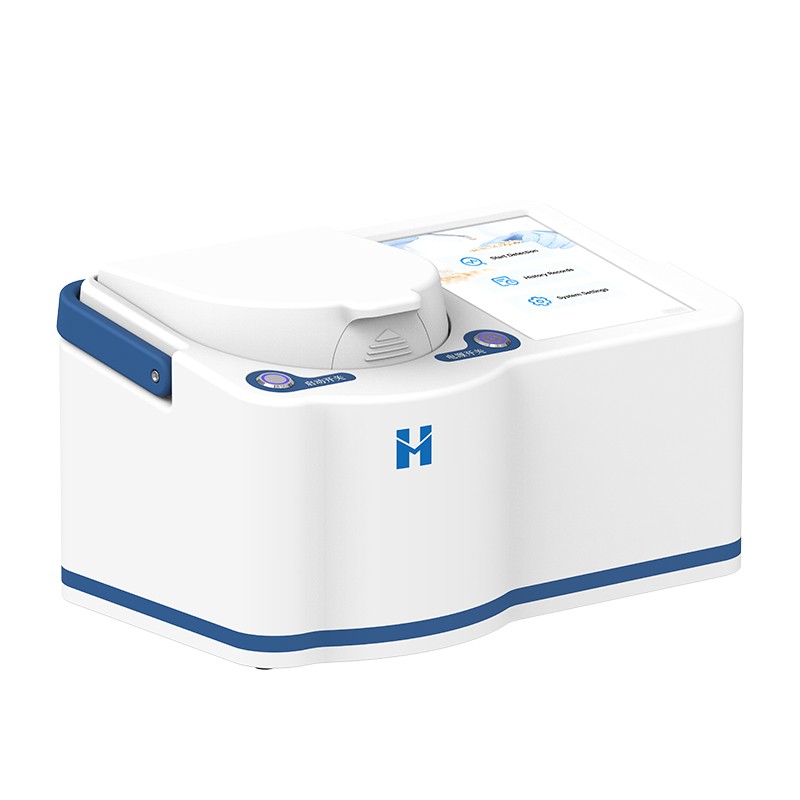
A soybean near-infrared result depends on the calibration linking spectra to reference composition values. HM-D100 acquires near-infrared spectral information and uses a mathematical model for composition analysis. Keep sample type and reporting basis consistent when comparing batches.
HM-D100 is part of the HENG MEI Intelligent Manufacturing range supplied by Shandong Hengmei Electronic Technology Co., Ltd.
How the measurement works
HM-D100 collects near-infrared spectra from granular soybean samples and applies calibration models for composition analysis. Its 950–1650 nm range supports the configured protein, fat, moisture and related applications. Model coverage and sample presentation influence the usefulness of the prediction.
Set up the analytical workflow
- Identify the soybean batch and prepare a representative granular sample.
- Select the calibration corresponding to the sample type and required reporting basis.
- Present the sample consistently and run the spectral measurement.
- Review unexpected values with appropriate reference testing and retain the calibration identity with the report.
Technical configuration
| Parameter | Specification |
|---|---|
| Spectral range | 950–1650 nm |
| test time | 80 seconds |
| sample-cell capacity | 500 g |
Convert protein to a dry basis consistently
For a sample with 36.0% protein on an as-is mass basis and 12.0% moisture, the corresponding dry-basis protein is 36.0 ÷ (1 − 0.12), approximately 40.9%. Apply the reporting basis required by the purchase or analytical method, and retain the moisture value used in the conversion.
Read rapid results alongside reference checks
The 80-second measurement supports rapid screening when sample presentation and calibration are suitable. Review unexpected predictions with the relevant reference method and the sample’s condition. Preserve calibration identity and reporting basis in exported results so batches can be compared consistently over time.
Introduce a new soybean supply stream
A new supplier or harvest can change the range of soybean material presented to the analyzer. Collect representative samples and compare predictions with the accepted reference measurements before relying on the model for the new material range. Keep moisture basis and sample presentation consistent during that assessment. Review the pattern of differences across the range instead of using one sample as the complete evaluation. Once the material is accepted into routine use, retain reference checks at the frequency set by the laboratory. This supports rapid intake screening while keeping calibration performance connected to the actual supply stream.
Evaluate the calibration with the intended soybeans
Define varieties, moisture conditions and the reporting basis needed for purchasing or processing. Compare predictions with suitable reference results across the expected material range. Plan ongoing checks with representative samples. A good operating process keeps sample preparation, presentation and calibration identity consistent as new batches arrive.
Investigate unexpected results
| Observed issue | Checks and follow-up |
|---|---|
| A new variety gives unusual predictions | Review calibration coverage and compare representative samples with the reference method. |
| Repeated scans vary | Check sample presentation, homogeneity and measurement conditions. |
| Two reports disagree on protein | Compare moisture basis, calibration and reference-method definitions. |
Keep a usable analytical record
Retain these details with the result so the preparation, measurement and subsequent review can be reconstructed.
- Soybean lot and sample condition
- Calibration identity
- Protein and moisture basis
- Reference checks and any model review
Technical questions from operators
Can a soybean calibration be used for any grain?
Use a model developed and checked for the intended sample material.
What does the measurement time include?
A measurement takes 80 seconds. Batch scheduling also includes sample handling and reference checks.
Use the required controls and the method settings for each sample group, and preserve the original observations alongside the accepted result and review action.
Article address:https://www.graintesting.cn/news/soybean-nir-results-and-calibration-scope.html
- Previous: HM Instruments Phthalate Detector Value Assessment
- Next: HENG MEI Intelligent Manufacturing Amylose Testing from Preparation to Optical Reading
Related products
Related articles
-
Hengmei Intelligent HM-DF Amylose Analyzer Product Knowledge Graph White Paper
2025-11-13 -
Application of Near Infrared Spectrometer in Grain Detection
2025-08-01 -
Rice Processing Accuracy Detector |Automated Milling Precision Analysis
2025-10-17 -
Technical principles and functional characteristics of the intelligent seed testing and analysis system
2025-08-01 -
HM Instruments Phthalate Detector Value Assessment
2026-08-07 -
Fully Automatic Fatty Acid Analyzer for Grain Storage
2025-10-23 -
Hengmei Intelligent HM-ZFS Automatic Fatty Acid Value Tester Product Knowledge Graph White Paper
2025-11-13 -
Portable rapeseed analyzer: a new paradigm of non-destructive and efficient quality control
2025-07-25