

Product
- Fatty acid value tester
- Amylose tester
- Rice freshness tester
- Rice taste meter
- Near infrared grain analyzer
- Soybean protein meter
- Rapeseed analyzer
- Wheat analyzer
- Fermented Grains Detector
- NMR oil content tester
- Wheat flour processing precision tester
- Rice processing precision tester
- Seed Analyzer
- Grain moisture meter
- Seed germination box
- Rice appearance quality analyzer
- Near infrared rice bran analyzer
- Grain hardness meter
- Grain Safety Tester
- Rice Heavy Metal Analyzer
- Portable soy protein analyzer: convenient and efficient detection of soybean quality
- Rice freshness tester: Quickly identify stale grains in 1 minute
- Straight chain starch analyzer: a new benchmark for rapid detection of grain quality
- Rapid and accurate evaluation of seed quality using a seed analyzer
- Fatty acid value tester: 10-minute rapid detection
- Rice Freshness Tester: A Scientific Tool for Grain Quality Control
Fully automatic fatty acid value analyzer: a key tool for safeguarding grain quality
Source:Hengmei Grain Testing Instrument Update time:2025-07-25 10:41:24
Food security is the cornerstone of national economy and people's livelihood. In the process of grain storage, the content of free fatty acids (FFA) produced by oil hydrolysis (i.e. fatty acid value) is the core indicator for evaluating whether the quality of grain has deteriorated, whether it is suitable for storage, or whether it has aged. A high fatty acid value not only means a decrease in the freshness of food and loss of nutrients, but also indicates the possibility of producing rancid taste and even breeding mycotoxins, seriously threatening food safety and processing quality. Therefore, accurate and efficient determination of fatty acid value is an indispensable link in grain storage, processing, trade, and quality inspection.
Traditional pain points: bottleneck between efficiency and objectivity
For a long time, the determination of fatty acid value in grains has mainly relied on manual titration method. This method is cumbersome to operate and requires high skills from experimental personnel. The steps involve weighing, crushing, leaching, filtering, titration, endpoint determination (color change), and calculation. The pain points are obvious:
Low efficiency: A single sample often takes more than 30 minutes, making it difficult to meet the needs of large-scale testing.
Subjective error: The judgment of endpoint color is easily influenced by human factors such as visual differences and lack of experience, leading to biased results.
Poor repeatability: The results fluctuate greatly between different operators or the same operator in different experiments.
Difficult data traceability: Manual recording is prone to errors and lacks efficient data management and traceability methods.
Technological Innovation: Working Principle of Fully Automatic Fatty Acid Value Tester
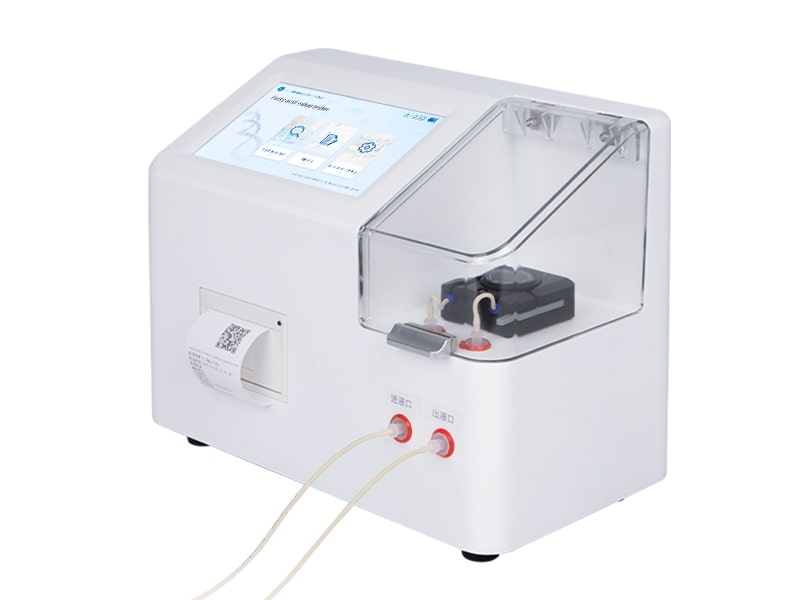
The fully automatic fatty acid value analyzer is designed to address the aforementioned pain points. Its core principle is based on the classic acid-base titration method, but it achieves full process automation and objective endpoint determination:
Sample pretreatment (semi-automatic/auxiliary): Users complete the crushing of representative grain samples (to achieve the specified fineness). Instruments are usually equipped with precision balance interfaces for easy recording of sample weight.
Automatic extraction and filtration: The instrument automatically adds a specified volume of organic solvent (such as anhydrous ethanol) to efficiently extract free fatty acids from the crushed sample. After the extraction is completed, automatic filtration is performed to obtain a clear filtrate to be tested.
Precision automatic titration: The instrument transfers the filtrate to a titration cup and automatically adds an indicator (or uses potentiometric method without indicator). The high-precision peristaltic pump precisely adds potassium hydroxide (KOH) standard titrant according to the preset program.
Intelligent endpoint determination (core technology): The instrument uses electrode potential jump as the control basis to indicate the endpoint. During the titration process, monitor the changes in the potential of the titration system in real-time. When the titration approaches the stoichiometric point (endpoint), a significant jump in potential occurs. The instrument's built-in high-sensitivity electrodes and intelligent algorithms can accurately capture this sudden jump point, automatically stop titration, and completely eliminate subjective errors in judging color changes with the naked eye.
Automatic calculation and data processing: The instrument automatically calculates the fatty acid value in units of "mg KOH/100g dry matter" based on parameters such as the volume of standard titrant consumed, sample weight, and moisture content. The results are displayed in real-time and can be stored, printed, or exported through an interface.
Significant advantages: precision, efficiency, intelligence, compliance
Compared to traditional manual methods, the fully automatic fatty acid value analyzer demonstrates revolutionary technological advantages:
Objective and accurate: The potential jump method is used to determine the endpoint, and the results are objective and reliable. Meet strict accuracy requirements: resolution of 0.01 mg KOH/100g, repeatability ≤ 2 mg/100g, coefficient of variation CV ≤ 4% when fatty acid value>12mg/100g, rice/corn double experiment difference ≤ 2mg/100g (in accordance with GB/T 20569, GB/T 20570).
Efficient and fast: significantly improves detection efficiency, with a single sample detection time of ≤ 10 minutes, suitable for rapid screening and quality control of large quantities of samples.
Easy to operate: high degree of automation, significantly reducing the requirements for operator skills and experience, and minimizing human errors. The friendly Android intelligent system (version 7.1) provides an intuitive operating experience.
Data worry free: Supports WIFI and Bluetooth wireless transmission of data to LIMS or data platforms, and supports USB copying. Built in data storage facilitates long-term traceability, analysis, and report generation, aiding in quality management.
Stable and durable: Professional dust cover design protects core components (peristaltic pump, hose); Wide environmental temperature adaptability (15 ℃ -40 ℃); Low noise operation (<60dB).
Wide compliance: fully meets the national standard requirements for fatty acid value determination of major grain varieties such as rice (GB/T 20569), corn (GB/T 20570), and wheat flour (GB/T 5510), with a measurement range covering 0-300 mg KOH/100g dry matter.
Widely applicable: the core detection tool that runs through the grain industry chain
The application scenarios of the fully automatic fatty acid value analyzer cover the entire grain industry chain:
National grain depots and reserves: large-scale grain situation survey, quality control of incoming grain, regular quality monitoring of stored grain (determining suitability for storage, unsuitability for storage or aging), and quality appraisal of outgoing grain.
Grain processing enterprises (rice mills, flour mills, oil mills): quality control of raw material procurement, quality monitoring of processing processes (such as rice milling and milling in rice mills), and quality inspection of finished products.
Grain trade and quality inspection institutions: quality arbitration between buyers and sellers, third-party fair inspection, and market supervision spot checks.
Research institutes and universities: physiological and biochemical research on grain storage, development of preservation technology, optimization of quality evaluation methods, and other scientific research work.
Application case: Value embodiment of efficiency and precision
Case 1: Efficiency Improvement of Rotation in a Provincial Reserve Warehouse
The reserve warehouse needs to complete quality testing of tens of thousands of tons of rice (with a focus on fatty acid value) in a short period of time during the rotation season. Using traditional manual methods results in tight manpower, low efficiency, and easily controversial outcomes. After introducing a fully automatic fatty acid value analyzer, the detection efficiency has been improved by more than three times, and the results are objectively consistent, effectively shortening the rotation cycle, reducing storage costs, and making the detection report more authoritative. When the instrument was detecting a batch of high moisture stored rice, it quickly discovered that its fatty acid value was approaching the warning line. The warehouse promptly took ventilation and cooling measures to avoid potential losses.
Case 2: Quality Control of Raw Materials for Large Flour Groups
A well-known flour group strictly requires the fatty acid value index of wheat raw materials to ensure flour quality and shelf life. Equipped with fully automatic fatty acid value measuring instruments at multiple raw material receiving points. The rapid and accurate detection capability of the instrument (≤ 10 minutes/sample) enables it to complete key indicator screening before unloading, reject non-conforming batches immediately, and significantly reduce product quality risks and subsequent process costs caused by raw material deterioration. During a random inspection, it was found that the fatty acid value of a certain batch of wheat had abnormally increased. After tracing, it was confirmed that it was due to high temperature and humidity during transportation, and timely measures were taken to stop the loss.
Shandong Hengmei Electronic Technology: Professional Instruments to Assist Food Security
Faced with the increasing demand for precise, efficient, and intelligent detection of fatty acid value in grain storage and processing, Shandong Hengmei Electronic Technology Co., Ltd. has launched a high-performance fully automatic fatty acid value tester with profound technical accumulation.
Hengmei fully automatic fatty acid value analyzer strictly follows the technical principles and parameter standards described in the article (such as pump flow accuracy RSD ≤ 1%, resolution 0.01mg KOH/100g, CV ≤ 4%, in compliance with GB/T 20569, GB/T 20570, GB/T 5510, etc.), integrates intelligent Android system, wireless data transmission, professional dust-proof design, and reliable data management platform. Its stable performance and convenient operation aim to provide a reliable fatty acid value detection solution for grain storage, processing, quality inspection, and scientific research institutions, becoming an important technological force in safeguarding China's grain quality and ensuring food security.
Article address:http://www.graintesting.cn/news/37.html
- Previous: Intelligent Seed Testing Analyzer: Key Technology for Precision Crop Breeding
- Next: Rice Freshness Tester: A Scientific Tool for Grain Quality Control
Related products
Related articles
-
Intelligent Seed Testing Analyzer: Key Technology for Precision Crop Breeding
2025-07-25 -
Near-Infrared Rice Bran Analyzer: Rapid, Non-Destructive Quality Assessment for Grain By-Products
2025-09-19 -
Hengmei Intelligent HM-ZFS Automatic Fatty Acid Value Tester Product Knowledge Graph White Paper
2025-11-13 -
Technical principles and functional characteristics of the intelligent seed testing and analysis system
2025-08-01 -
Straight chain starch analyzer: a new benchmark for rapid detection of grain quality
2025-07-25 -
The Advantages of NIR Grain Analyser:Non-Destructive, Portable, and Efficient
2025-09-05 -
Rice Taste Analyzer: An Intelligent Tool for Scientifically Evaluating Rice Quality
2025-08-01 -
Soybean Protein Analyzer Product Knowledge Graph White Paper
2025-11-21