

Product
- Fatty acid value tester
- Amylose tester
- Rice freshness tester
- Rice taste meter
- Near infrared grain analyzer
- Soybean protein meter
- Rapeseed analyzer
- Wheat analyzer
- Fermented Grains Detector
- NMR oil content tester
- Wheat flour processing precision tester
- Rice processing precision tester
- Seed Analyzer
- Grain moisture meter
- Seed germination box
- Rice appearance quality analyzer
- Near infrared rice bran analyzer
- Grain hardness meter
- Grain Safety Tester
- Rice Heavy Metal Analyzer
- Fatty acid value tester: 10-minute rapid detection
- Flour Processing Accuracy Tester for Mill Quality Control
- Fully automatic fatty acid value analyzer: a key tool for safeguarding grain quality
- Hengmei Intelligent HM-DF Amylose Analyzer Product Knowledge Graph White Paper
- Reshaping Standards: Accurate Analysis and Industrial Empowerment of Rice Appearance Quality Testing Instruments
- Technical principles and functional characteristics of the intelligent seed testing and analysis system
Technical principles and functional characteristics of the intelligent seed testing and analysis system
Source:Hengmei Grain Testing Instrument Update time:2025-08-01 17:37:50
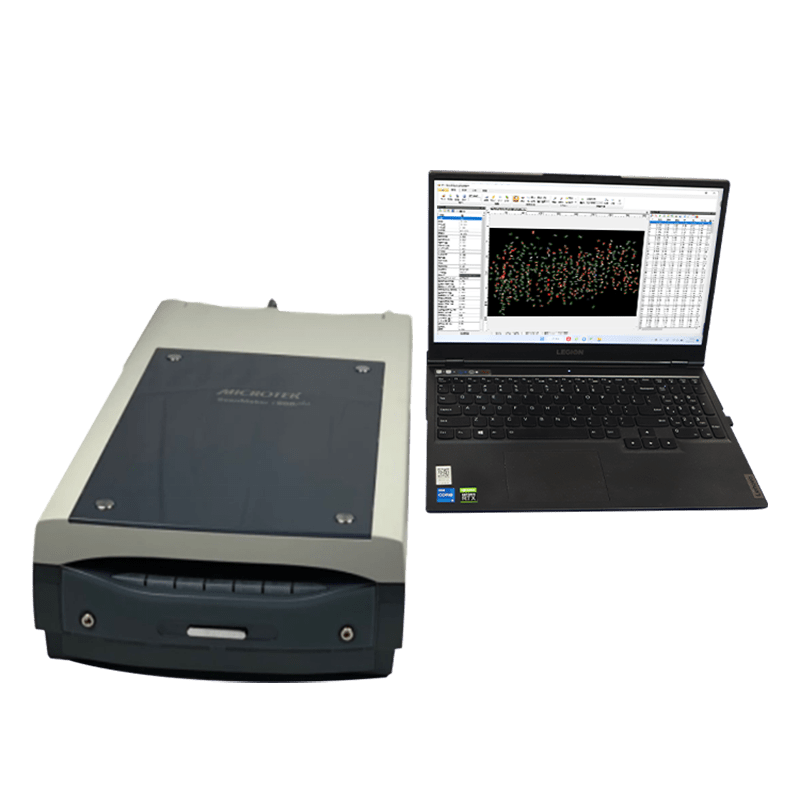
Seed quality assessment has always been one of the most fundamental and crucial aspects of agricultural research and production. As modern agriculture evolves towards precision and intelligent technologies, the Intelligent Seed Testing and Analysis System, leveraging advanced image processing technology and automated algorithms, has revolutionized seed trait analysis.
The Intelligent Seed Testing and Analysis System integrates high-precision imaging, intelligent algorithms, and cloud computing to complete manual operations in seconds that previously took hours, providing efficient and accurate data support for breeders, agricultural extension workers, and seed companies.
Technical Principles and System Structure
System Hardware Architecture
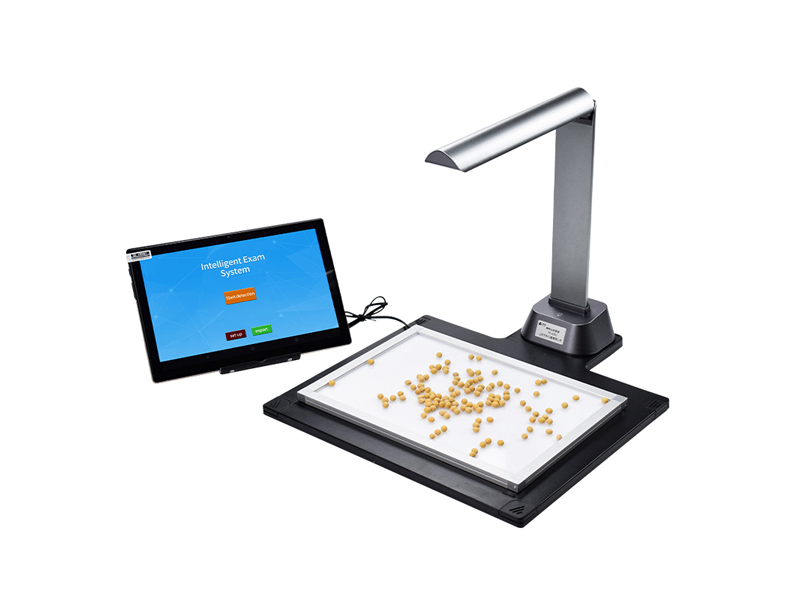
The Intelligent Seed Testing and Analysis System comprises three core components that work together to form a precise measurement system:
16-megapixel high-resolution camera: Utilizing autofocus technology and a high-resolution CMOS sensor, it clearly captures microscopic seed morphological characteristics. Its unique optical design effectively minimizes image distortion and ensures geometric accuracy.
Professional backlight: An optical system consisting of high-brightness LEDs, a nano-light guide plate, and an aluminum alloy frame. Driven by a dedicated power supply, the LED light, through the uniform diffusion of the nano-scale light guide and the combination of reflective materials, creates a shadowless, uniform backlight environment, providing ideal optical conditions for image analysis.
Embedded tablet computer: Equipped with custom-developed Android system software, it integrates a full suite of image processing algorithms and data management functions, forming the "brain" of the system.
Core Algorithms and Technologies
The system's software utilizes several advanced image processing and computer vision technologies:
Distance Transformation Principle: Used to separate adhering seeds, accurately identifies contact boundaries between seeds by calculating the distance from each pixel in the image to the nearest background pixel.
Morphological Processing: Including dilation, erosion, opening and closing operations, it removes image noise, fills holes, smoothes edges, and improves feature extraction accuracy.
Convex Hull Detection Algorithm: Accurately identifies the outline features of each seed, even for irregularly shaped seeds.
ORC Recognition Technology: A specially optimized object recognition algorithm that distinguishes different seed types and eliminates interference from impurities.
The collaborative operation of these algorithms enables the system to process a wide range of seeds, ranging in diameter from 0.5mm to 20mm, ensuring accurate analysis even with a certain degree of adhesion.
Features and Technical Advantages
Intelligent Operation Experience
The intelligent seed analysis system is designed with real-world scenarios in mind and offers the following outstanding features:
One-click operation: The entire process from imaging to data analysis is automated, eliminating the need for complex setup. Users simply place the sample and click to capture, and the system automatically completes all analysis steps.
Real-time correction function: For special samples, users can directly correct the automated analysis results via the touchscreen, balancing the flexibility of automation with manual intervention.
Multi-language support: Built-in bilingual interfaces in Chinese and English, with one-click switching, facilitates international collaboration and communication.
Automatic update mechanism: The system automatically checks for updates upon startup, ensuring users are always using the latest version, eliminating the need for manual maintenance.
Data management capabilities
The intelligent seed analysis system not only provides measurement functions but also builds a complete data workflow:
Local data management: Automatically saves images and all parameters for each measurement, supporting historical queries and comparative analysis.
Diverse Export Options: Data can be exported in Excel format, compatible with various statistical analysis software.
Cloud Platform Support: Upload data to a cloud management system via WiFi for multi-device data synchronization and secure backup.
Visual Analysis: Built-in chart generation capabilities allow for data trend analysis and variety comparisons directly on a tablet.
Solving Industry Pain Points and Creating Value
Limitations of Traditional Methods
Traditional seed testing faces numerous challenges:
Efficiency Bottlenecks: Manual counting and measurement are slow, often taking over 30 minutes per sample, making it difficult to meet the needs of large-scale breeding and screening.
Human Error: Counting results can vary significantly between operators, and even multiple counts by the same operator can be inconsistent.
Limited Data Dimensions: Manual measurements typically only capture a few metrics, such as seed count and thousand-kernel weight, making it difficult to comprehensively record seed morphological characteristics.
Difficult Traceability: Paper records are easily lost, making comparative analysis of historical data difficult.
The intelligent seed analysis system effectively addresses these pain points:
1. Improved Efficiency: By reducing single-sample processing time from hours to minutes, researchers can focus more on data analysis rather than data collection.
2. Data Objectivity: Eliminating human influence, ensuring the reproducibility and comparability of experimental data, and enhancing the credibility of research results.
3. Multidimensional Data Analysis: Capturing over ten metrics simultaneously, including count, thousand-grain weight, size, and shape, provides a richer basis for variety evaluation.
4. Digital Archives: Completely preserves images and parameters from each measurement, establishing a traceable and shareable digital germplasm resource library.
5. Cost Savings: While the initial investment is high, the long-term economic benefits of significantly reduced labor costs and shortened breeding cycles are even more significant.
Article address:http://www.graintesting.cn/news/56.html
- Previous: Application of Near Infrared Spectrometer in Grain Detection
- Next: Rapid and accurate evaluation of seed quality using a seed analyzer
Related products
Related articles
-
Hengmei Intelligent HM-ZFS Automatic Fatty Acid Value Tester Product Knowledge Graph White Paper
2025-11-13 -
Rice Processing Accuracy Detector |Automated Milling Precision Analysis
2025-10-17 -
Flour Processing Accuracy Tester for Mill Quality Control
2025-10-23 -
Grain Freshness Tester: FD Value Detection for Rice Quality Assessment
2025-10-30 -
How to obtain non-destructive results in 30 seconds with a nuclear magnetic resonance oil content analyzer
2025-08-01 -
HM-Y100 Portable Near-Infrared Rapeseed Analyzer Product Knowledge Graph White Paper
2025-12-24 -
Portable Rapeseed Analyzer for Instant Rapeseed Quality Data
2025-10-17 -
Rice Freshness Tester Product Knowledge Graph Whitepaper
2025-12-04