

Product
- Fatty acid value tester
- Amylose tester
- Rice freshness tester
- Rice taste meter
- Near infrared grain analyzer
- Soybean protein meter
- Rapeseed analyzer
- Wheat analyzer
- Fermented Grains Detector
- NMR oil content tester
- Wheat flour processing precision tester
- Rice processing precision tester
- Seed Analyzer
- Grain moisture meter
- Seed germination box
- Rice appearance quality analyzer
- Near infrared rice bran analyzer
- Grain hardness meter
- Grain Safety Tester
- Rice Heavy Metal Analyzer
- Hengmei Intelligent HM-ZFS Automatic Fatty Acid Value Tester Product Knowledge Graph White Paper
- Hengmei Intelligent HM-DF Amylose Analyzer Product Knowledge Graph White Paper
- Portable rapeseed analyzer: a new paradigm of non-destructive and efficient quality control
- Technical principles and functional characteristics of the intelligent seed testing and analysis system
- Hengmei Intelligent Fungal Toxin Detector Product Knowledge Graph White Paper
- Near-Infrared Wheat Analyzer Product Knowledge Graph Whitepaper
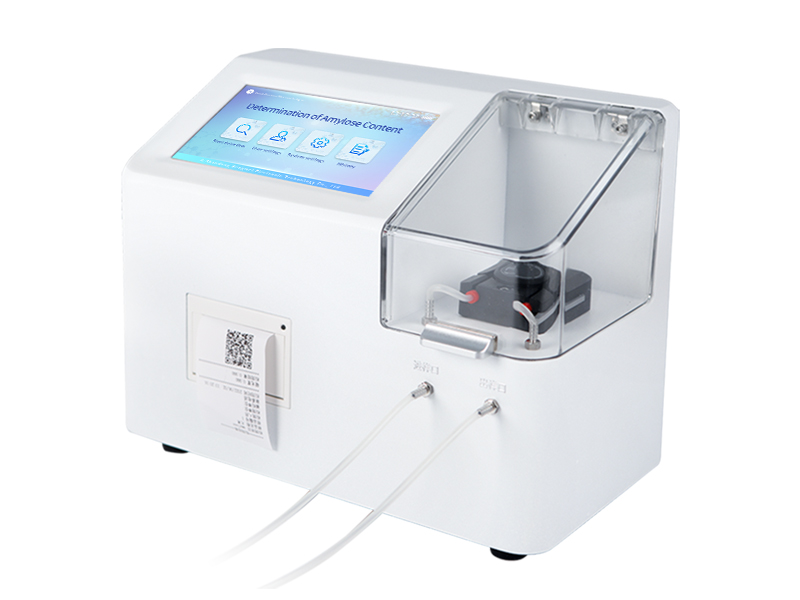
Amylose Analyzer: Precision Grain Quality Testing with Photoelectric Detection
Source:Hengmei Grain Testing Instrument Update time:2025-09-19 16:20:43
In the fields of grain cultivation, processing, and trade, the content of amylose is an important indicator for measuring grain quality, which directly affects the taste, cooking characteristics, and processing applicability of grain. As a specialized device for detecting the content of amylose in grains, the amylose analyzer plays an important role in ensuring grain quality and improving production efficiency.
Working Principle:
The working principle of the amylose analyzer is based on photoelectric detection technology. The linear starch in grains reacts with specific reagents to form complexes with specific optical properties. The instrument uses a high stability LED cold light source with customized wavelength to irradiate the reacted sample, captures the absorption of light using an integrated photoelectric detection unit, and combines it with a built-in standard working curve. Through systematic analysis and calculation, the content of amylose in the sample can be obtained.
Technical advantages:
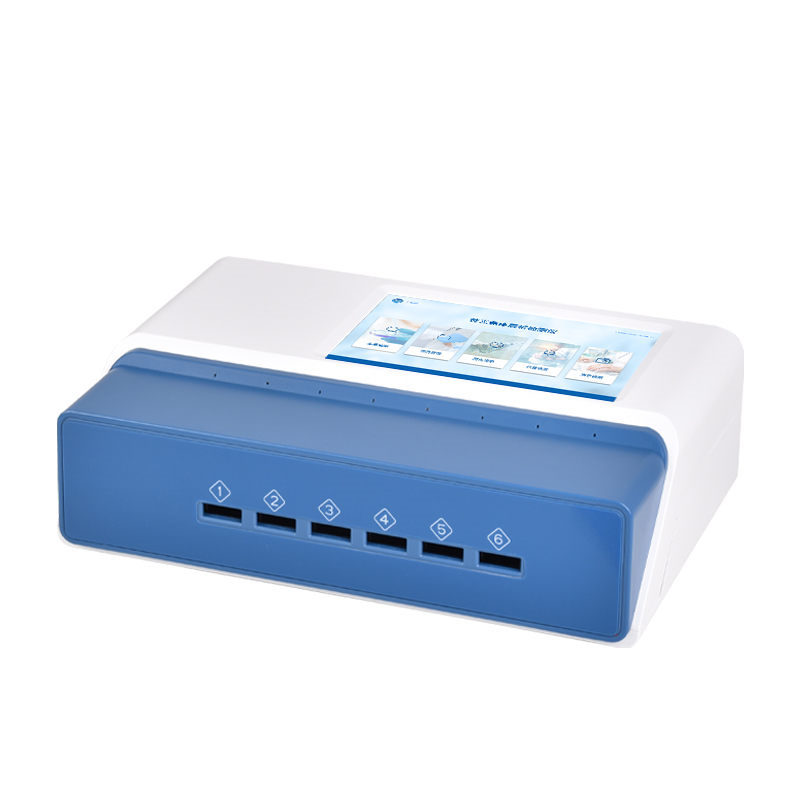
The amylose analyzer has significant technological advantages. It adopts the Android 7.1 version of the Android system, which has a higher degree of intelligence and more convenient operation. By using a peristaltic pump for continuous automatic sampling, flow detection is not limited by the number of samples and can continuously test multiple samples, greatly improving detection efficiency. The integrated photoelectric detection unit simplifies manual operation and makes the detection process more efficient.
Customized wavelength high stability LED cold light source emits light multiple times during the detection process, making the detection data more accurate. The intelligent constant current and voltage stabilization design realizes automatic adjustment and calibration of light intensity, ensuring that the light source works continuously for a long time without temperature drift, and guaranteeing the stability of the detection results. A 7-inch touchscreen display paired with an efficient UI interactive interface provides a better user experience.
The instrument has WiFi networking function, which can quickly upload detection data wirelessly. It is also equipped with a data management platform, which can visually manage the uploaded historical data and conduct long-term and short-term analysis of food security. At the same time, it supports direct copying of data from a USB flash drive, and the standard USB interface does not require driver insertion and removal, making data processing flexible and convenient. The new generation of high-speed thermal printers allows for the selection of printing or batch printing of inspection reports after completion, meeting different data recording needs.
Application fields:
The application fields of amylose analyzer are wide. In the process of grain procurement, the amylose content of rice, corn, wheat and other grains can be quickly detected to help the purchaser accurately judge the quality of the grain and determine a reasonable price; Food processing enterprises use it to detect the amylose content of raw materials and finished products to ensure the stability of product quality. For example, when producing Rice noodles, noodles and other products, they can control the amylose content of raw materials to ensure the taste of products; In the field of agricultural research, it can provide data support for the improvement of grain varieties and cultivate varieties that better meet market demand; The grain regulatory authorities use it to conduct quality inspections and maintain order in the grain market.
In summary, the amylose analyzer plays a crucial role in the field of grain quality inspection. Its advanced technological advantages and wide applications can provide strong support for related work and bring tangible value enhancement. Choosing a suitable amylose analyzer is of great significance for controlling grain quality and improving work efficiency.
Article address:http://www.graintesting.cn/news/75.html
- Previous: The Advantages of NIR Grain Analyser:Non-Destructive, Portable, and Efficient
- Next: Near-Infrared Rice Bran Analyzer: Rapid, Non-Destructive Quality Assessment for Grain By-Products
Related products
Related articles
-
Amylose tester for high-throughput detection:Breed research instruments and equipment
2025-08-01 -
Hengmei Intelligent HM-ZFS Automatic Fatty Acid Value Tester Product Knowledge Graph White Paper
2025-11-13 -
Portable soy protein analyzer: convenient and efficient detection of soybean quality
2025-08-01 -
Rice Taste Value Tester: A Quality Improvement Tool from Field to Table
2025-07-25 -
Fatty acid value tester: 10-minute rapid detection
2025-08-01 -
Soybean Protein Analyzer Product Knowledge Graph White Paper
2025-11-21 -
What are the functions and characteristics of the rice processing accuracy tester?
2025-08-01 -
NMR Oil Analyzer Product Knowledge Graph White Paper
2025-12-22