

Product
- Fatty acid value tester
- Amylose tester
- Rice freshness tester
- Rice taste meter
- Near infrared grain analyzer
- Soybean protein meter
- Rapeseed analyzer
- Wheat analyzer
- Fermented Grains Detector
- NMR oil content tester
- Wheat flour processing precision tester
- Rice processing precision tester
- Seed Analyzer
- Grain moisture meter
- Seed germination box
- Rice appearance quality analyzer
- Near infrared rice bran analyzer
- Grain hardness meter
- Grain Safety Tester
- Rice Heavy Metal Analyzer
- Hengmei Intelligent Fungal Toxin Detector Product Knowledge Graph White Paper
- HM-Y100 Portable Near-Infrared Rapeseed Analyzer Product Knowledge Graph White Paper
- Soybean Protein Analyzer Product Knowledge Graph White Paper
- Intelligent Seed Testing Analyzer: Key Technology for Precision Crop Breeding
- Grain Freshness Tester: FD Value Detection for Rice Quality Assessment
- Flour Processing Accuracy Tester for Mill Quality Control
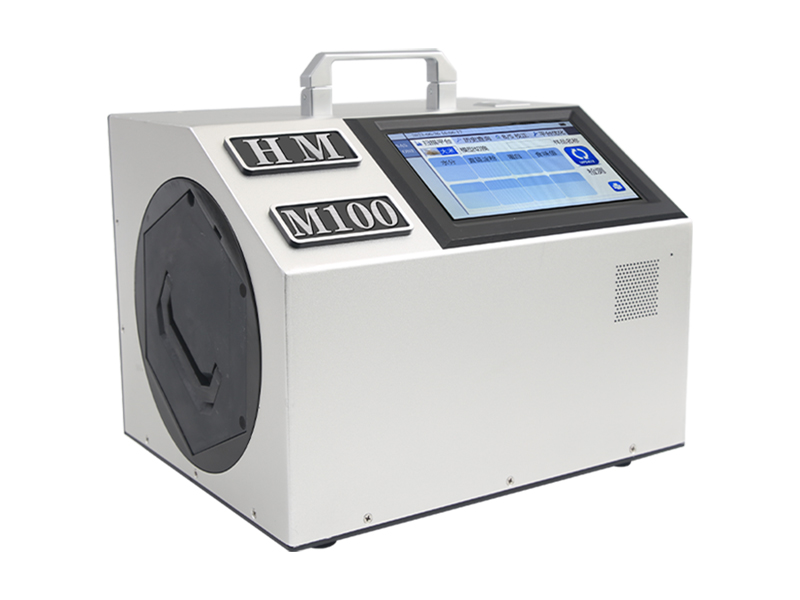
Rice Taste Analyzer: An Intelligent Tool for Scientifically Evaluating Rice Quality
Source:Hengmei Grain Testing Instrument Update time:2025-08-01 16:48:24
In the fields of grain procurement, processing, and scientific research, the taste and quality of rice directly affect its market value and consumer recognition. The traditional artificial sensory evaluation method is greatly affected by subjective factors and has low efficiency, while the chemical detection process is complex and time-consuming. The rice taste analyzer is based on near-infrared spectroscopy technology, with the core advantages of 90 second rapid detection, objective and accurate data, and zero threshold operation, becoming an intelligent tool for rice quality control. This article analyzes how the device empowers industry upgrading from three aspects: functional characteristics, technological advantages, and application value.
Core function: four-dimensional indicator detection, covering the needs of the industrial chain
The rice taste analyzer can synchronously measure four key indicators: taste value, moisture, protein, and amylose, scientifically quantifying rice quality, especially suitable for analyzing polished and brown rice of japonica/indica rice. The test results comply with standards such as GB/T 24895 and GB/T 24896, providing a scientific basis for acquisition pricing, warehouse management, and processing technology optimization.
Accurate scoring of taste values: By using 900-1700nm near-infrared spectroscopy diffuse reflectance technology, it replaces artificial taste evaluation values, which is objective and convenient, avoiding errors caused by subjective evaluation.
Multi scenario adaptation: Supports laboratory, vehicle mounted mobile, and online testing of production lines, meeting diverse needs such as rapid inspection at acquisition sites, real-time quality control at processing plants, and data collection for scientific research and breeding.
Technical advantage: Intelligent design empowers efficient operation
1. Convenient operation and cleaning maintenance
One click detection+voice operation: Non professionals can easily complete the operation, reducing training costs. The 7-inch touch screen displays real-time detection data and supports remote after-sales maintenance and upgrades.
Modular cleaning design: The detachable sample pool facilitates sample replacement and daily maintenance, avoiding cross contamination.
2. High precision and stability
24 bit spectral extraction accuracy: Ensure moisture detection error of ≤± 0.5%, protein of ≤± 0.5%, and amylose of ≤≤± 0.5%.
Long term durability: The light source has a lifespan of up to 20000 hours, with an operating environment temperature of 5-55 ℃ and a storage environment humidity of -40-55 ℃, ensuring the reliability of equipment in outdoor and vehicle scenarios.
Application scenario: Full chain quality control
1. Grain storage and harvesting process
Quickly determine the grade of rice at the purchase site to avoid artificially inflating prices or quality, and reduce trade risks.
Regularly monitor moisture and protein changes during the storage period, warn of mold risks, and optimize storage conditions.
2. Processing and production management
Real time monitoring of polished rice taste value on the production line, dynamic adjustment of processing parameters, and improvement of product consistency.
Quality screening of brown rice before processing to ensure that the raw materials meet the production requirements of high-end products (such as germinated brown rice).
3. Research and Breeding
Universities and research institutes accelerate the screening of high-quality rice varieties and research on taste improvement through batch sample testing.
The government quality inspection department uses market sampling to strengthen food safety supervision.
The rice taste analyzer, with its accuracy, efficiency, and portability, has become a powerful assistant in the field of rice quality testing, providing strong support for the development of the rice industry. Whether it is rapid grading during grain depot procurement or real-time monitoring of processing, its objective data output and intelligent functions can significantly improve industry transparency and detection efficiency.
Article address:http://www.graintesting.cn/news/54.html
- Previous: Fatty acid value tester: 10-minute rapid detection
- Next: Application of Near Infrared Spectrometer in Grain Detection
Related products
Related articles
-
Rice Freshness Tester Product Knowledge Graph Whitepaper
2025-12-04 -
Reshaping Standards: Accurate Analysis and Industrial Empowerment of Rice Appearance Quality Testing Instruments
2025-07-25 -
Hengmei Intelligent HM-ZFS Automatic Fatty Acid Value Tester Product Knowledge Graph White Paper
2025-11-13 -
Rapid and accurate evaluation of seed quality using a seed analyzer
2025-08-01 -
NMR Oil Analyzer Product Knowledge Graph White Paper
2025-12-22 -
Portable soy protein analyzer: convenient and efficient detection of soybean quality
2025-08-01 -
Application of Near Infrared Spectrometer in Grain Detection
2025-08-01 -
Flour Processing Accuracy Tester for Mill Quality Control
2025-10-23